Photosensitive Sensor
Principle
The Photosensitive Sensor is a device that converts light signals into electrical signals using a photosensitive element. In this sensor, there is an inverse relationship between the light intensity and the returned value: the stronger the light, the smaller the returned value; the weaker the light, the larger the returned value.
Specifications
Item |
Description |
|---|---|
Name |
Photosensitive Sensor |
Code |
B0020013 |
Dimension |
28×24×12 mm |
Voltage |
5V - DC |
Ports |
Grove |
Data Type |
Analog Signal |
Data Range |
0~1023 (Bright ~ Dark) |
Usage
|
||
|---|---|---|
|
|
|
Side View |
Front View |
Side View |

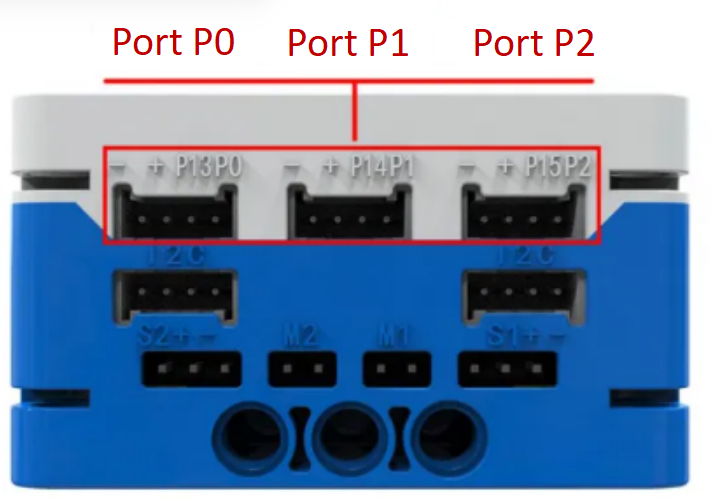
The photosensitive sensor can be connected to the P0, P1, and P2 interfaces of the micro:bit smart hub. In the coding environment, users can read the analog values from the sensor. Its characteristic is that the stronger the light, the higher the value output by the sensor; conversely, in a darker environment, the sensor’s output value decreases.
Modular Coding

In the MakeCode coding software, the sensor signal value from the P0 port can be read using the micro:bit extension. The data can then be visualized on the micro:bit’s LED matrix.